A savvy traveler from the UK has discovered that living in a luxurious all-inclusive resort is cheaper than paying rent.
Josh Kerr, a TikToker from Manchester, England, has shaken up our traditional notions of renting and vacationing. While casually searching for holiday deals, he stumbled upon an excellent opportunity that promised not only a great vacation but also significant savings. Kerr realized that for the same price as his monthly rent, he could enjoy a stay at a luxurious hotel—and even spend less!
Travel Hack
Key Details:
Travel Hack Discovery: Josh Kerr was browsing for all-inclusive holiday deals and found he could book a 28-night stay.
Cost Comparison: The total cost for a month-long stay at the Port River Hotel and Spa in Antalya, Turkey, was just $1,175. His monthly rent and other expenses in Manchester totaled $1,192, excluding food and drink.
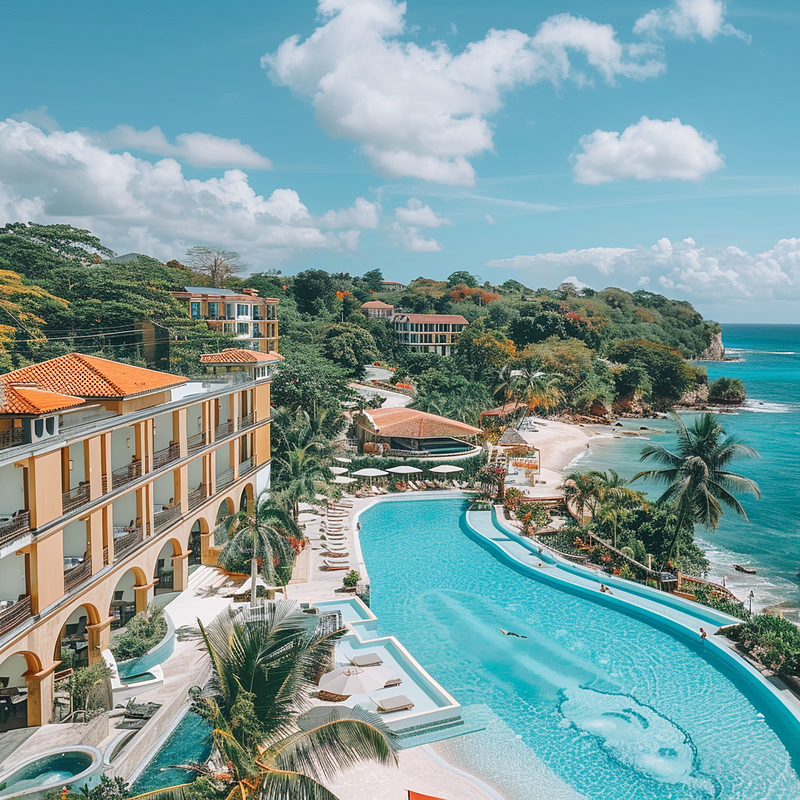
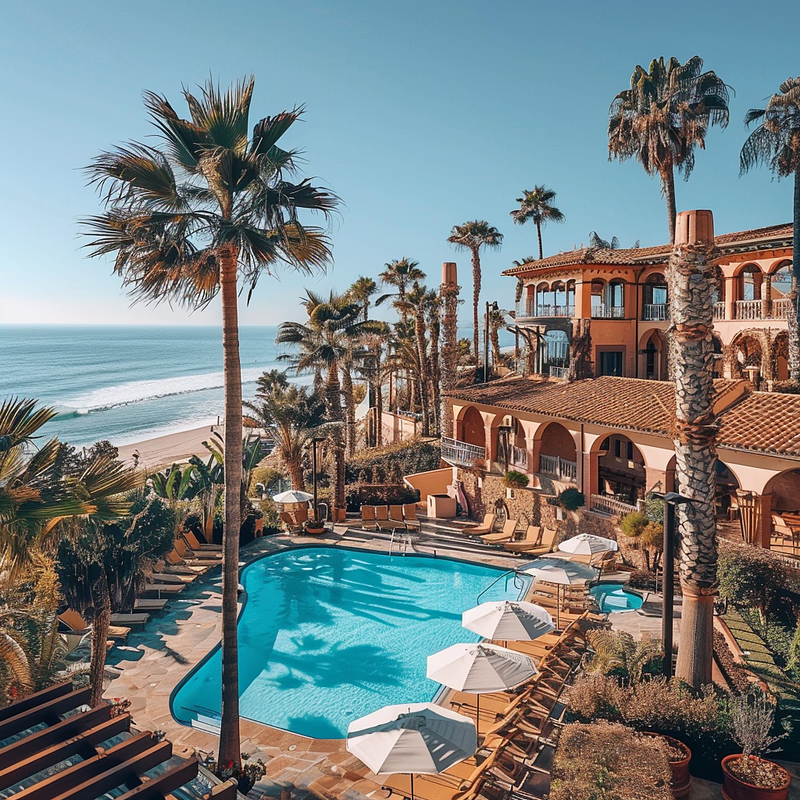
Luxurious Amenities: The Port River Hotel offers amenities such as a pool, gym, and stunning beach views, plus unlimited food and drinks.
Social Media Buzz: Josh’s story quickly went viral, gaining praise for his ingenuity and sparking conversation about alternative living arrangements.
Comments from the Public: Online users described Kerr’s discovery as the “ultimate cheat code” and “genius,” with some expressing interest in following suit if they secure remote work roles.
Josh’s experience highlights the appeal of resort living, combining comfort and savings. Could this innovative approach be the future of affordable living? As remote work becomes more accessible, many might consider this option.
The significance of Josh Kerr’s travel hack reaches beyond personal savings. It opens a broader discussion about affordable living options in a time where rental costs are skyrocketing. As more people discover such opportunities, it could lead to a paradigm shift in how we think about residency and vacationing.
As we look ahead, it will be intriguing to see if others adopt this lifestyle and if businesses, particularly in the travel and housing sectors, begin to offer new solutions that blend the best of both worlds.
Please note that this post may contain affiliate links. When booking through one of our links, we earn a small kickback at no extra cost to you, and it’s a big help to keep the site up and running.
Explore Europe by train with our list of 33 must-see routes. These journeys offer more than just travel. They show you Europe’s beauty from mountains to coastlines. Enjoy the views from a train, feeling the romance of the rails.
Travel through Switzerland’s valleys or Norway’s coastlines. Our list covers 57% of Eastern Europe and 29% of Western Europe. You might visit two new countries on your trip. Even if your plans change, it makes the journey more exciting.
Some routes are short, like the one from Weiden to Regensburg in Germany. Others, like the Flam Railway in Norway, take you high up. Each route offers unique views, making rail travel special.
First-class seats are rare, but 2nd class is just as fun. Dealing with ticket offices can be tough, but the views make it worth it.
Key Takeaways
Experience immense diversity with 57% of routes in Eastern Europe and 29% in Western Europe.
On average, explore two new countries per trip for a richer travel experience.
40% of journeys involve spontaneous route changes, adding to the thrill.
Relish the comfort and scenic views with larger, more comfortable seats and panoramic windows.
Be prepared for occasional customs checks at every border crossing.
Peak seasons can cause ticket office delays, but the journey is worth the wait.
Scenic European train journeys turn travel into a luxurious, memorable adventure.
Why Train Travel is the Best Way to See Europe
Start your European journey with train travel. It’s a top way to see the continent’s culture and geography. You get to see amazing views, travel easily between cities, and meet new people.
The Allure of Train Travel
Train travel is good for the planet. Trains are much cleaner than planes, says the European Environment Agency. Imagine seeing beautiful views on the Bernina Express while helping the environment.
Trains let you see things you can’t see by car or plane. The West Highland Line in Scotland takes you through stunning scenery. Tickets start at €19.50. The Venice Simplon-Orient-Express is luxurious and scenic but costs over €4,000 per person.
Comparing Train Travel to Other Modes of Transportation
Trains beat flights and cars in many ways. They have more room and let you bring more luggage. Checking in is quick and easy, making your trip less tiring.
Trains take you right to the city center, saving you time. The Cinque Terre Express in Italy costs from €14.80 and shows views you can’t see by plane or car.
Booking Tips for European Train Travel
Booking trains well is important. Think about getting a rail pass for more travel freedom and savings. This lets you hop on and off trains easily, perfect for exploring different places.
There are five great rail trip ideas for Europe. They cover Northern Europe, Italy, Eastern Europe, Spain & Portugal, and Scandinavia. For example, you can visit Amsterdam, Bruges, Paris, Chur, and Milan in just a week.
Book early to get the best deals on scenic routes like the Bernina Express. Use online tools to make booking easy and keep up with schedules and prices.
Top Scenic Train Routes in Western Europe
Western Europe has some of the most beautiful train trips. You can see the Alps, the French Riviera, and Norway by train. These routes are perfect for those who love to see beautiful views. Let’s look at three amazing routes that show the beauty of the Alps and more.
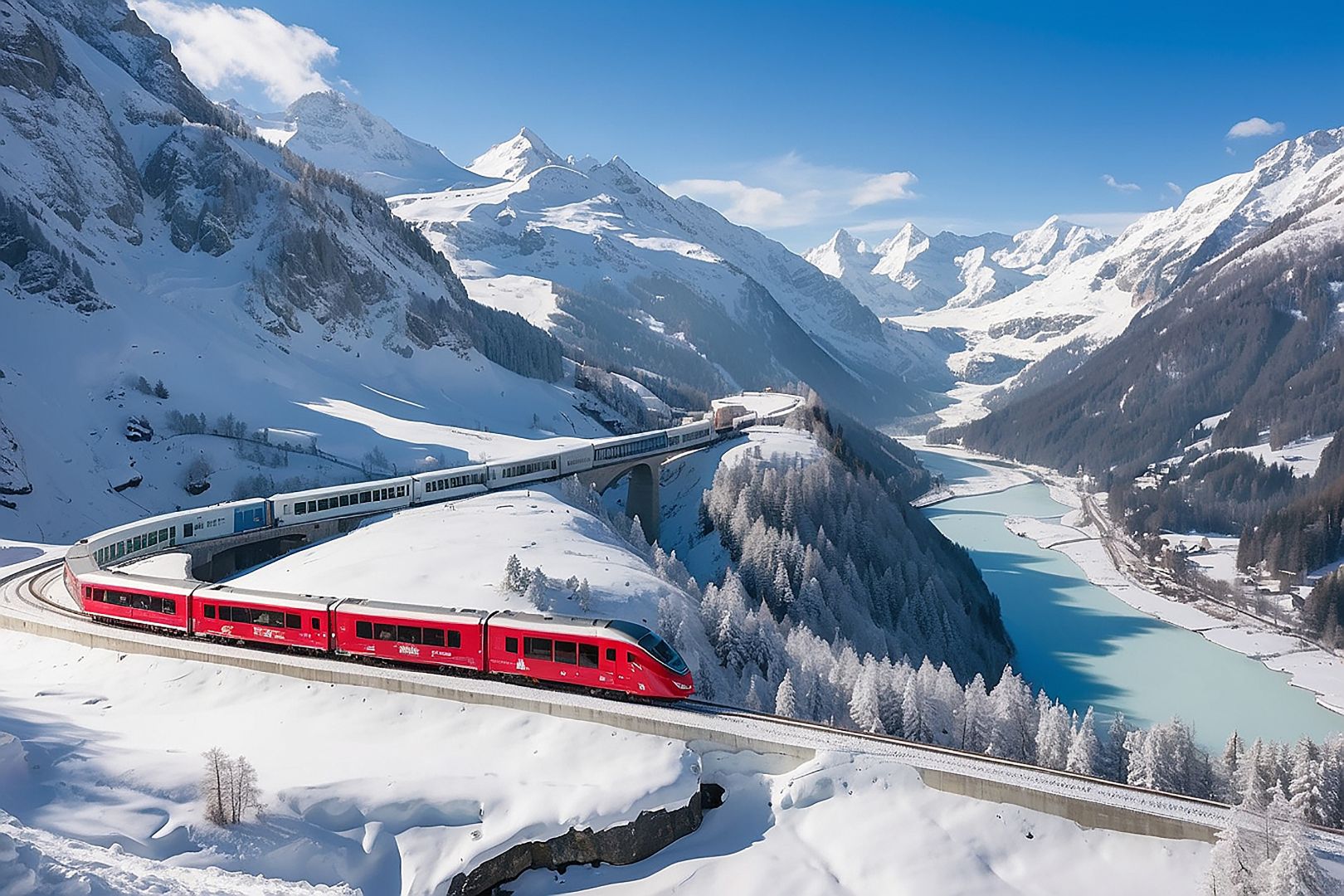
Swiss Alps: Glacier Express
The Glacier Express is a top choice for seeing the Swiss Alps. It goes from St-Moritz to Zermatt, covering 152km in seven and a half hours. You’ll see amazing mountains and engineering wonders as you go.
This train takes you through snow mountains, deep valleys, and pretty villages. It’s a trip you won’t forget.
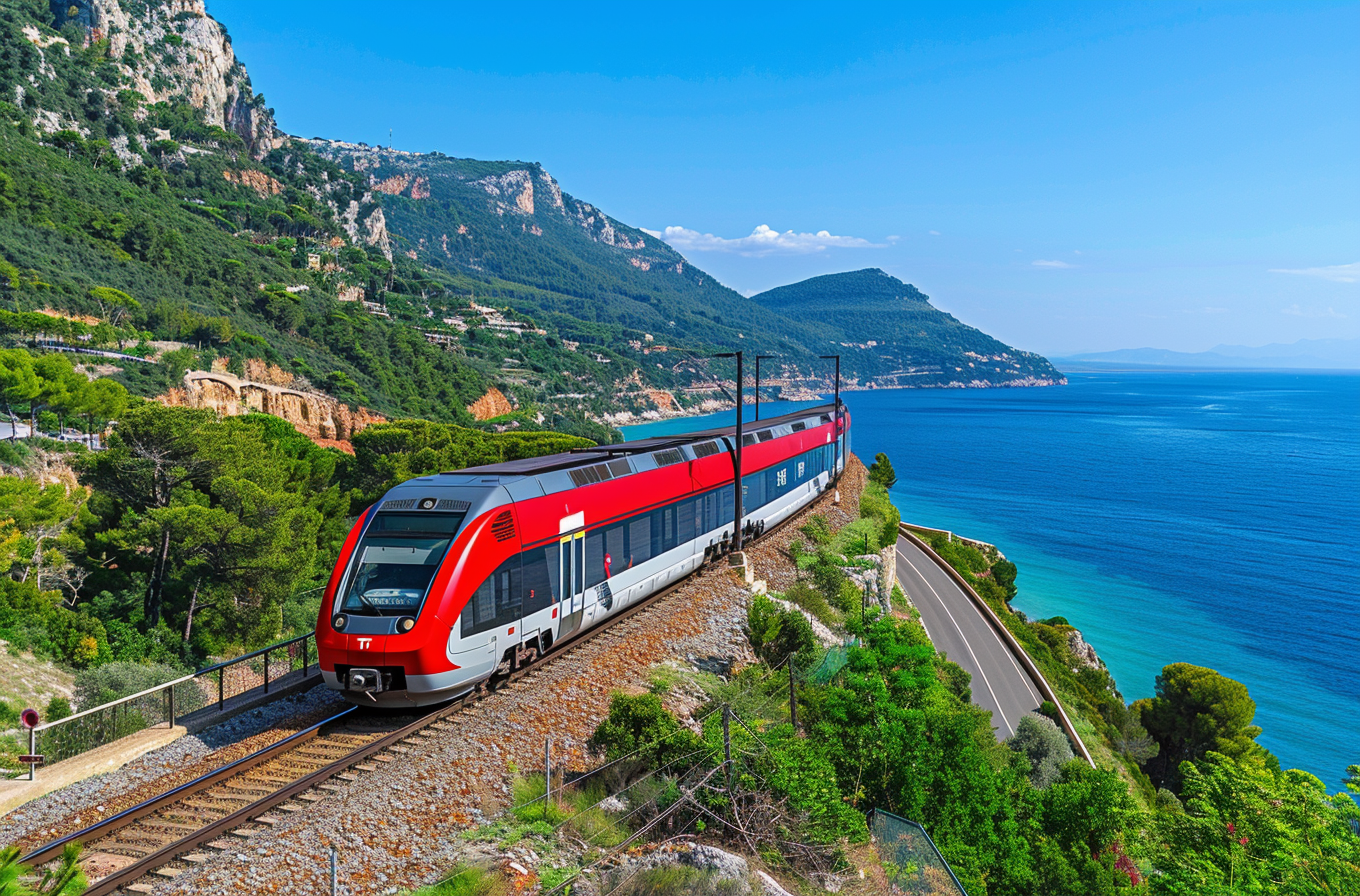
France: The French Riviera by Train
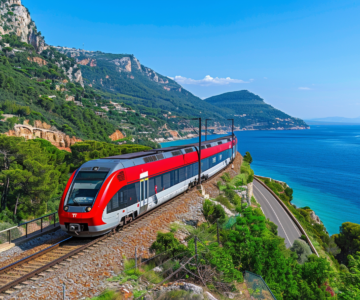
Take a train trip along the French Riviera for stunning views. You’ll see blue waters and high cliffs. The train stops at places like Nice, Cannes, and Monaco.
The trip from Marseille to Nice is 218km and takes two and a half hours. You’ll see fields of lavender, the coast, and pretty villages. It’s a journey you’ll love.
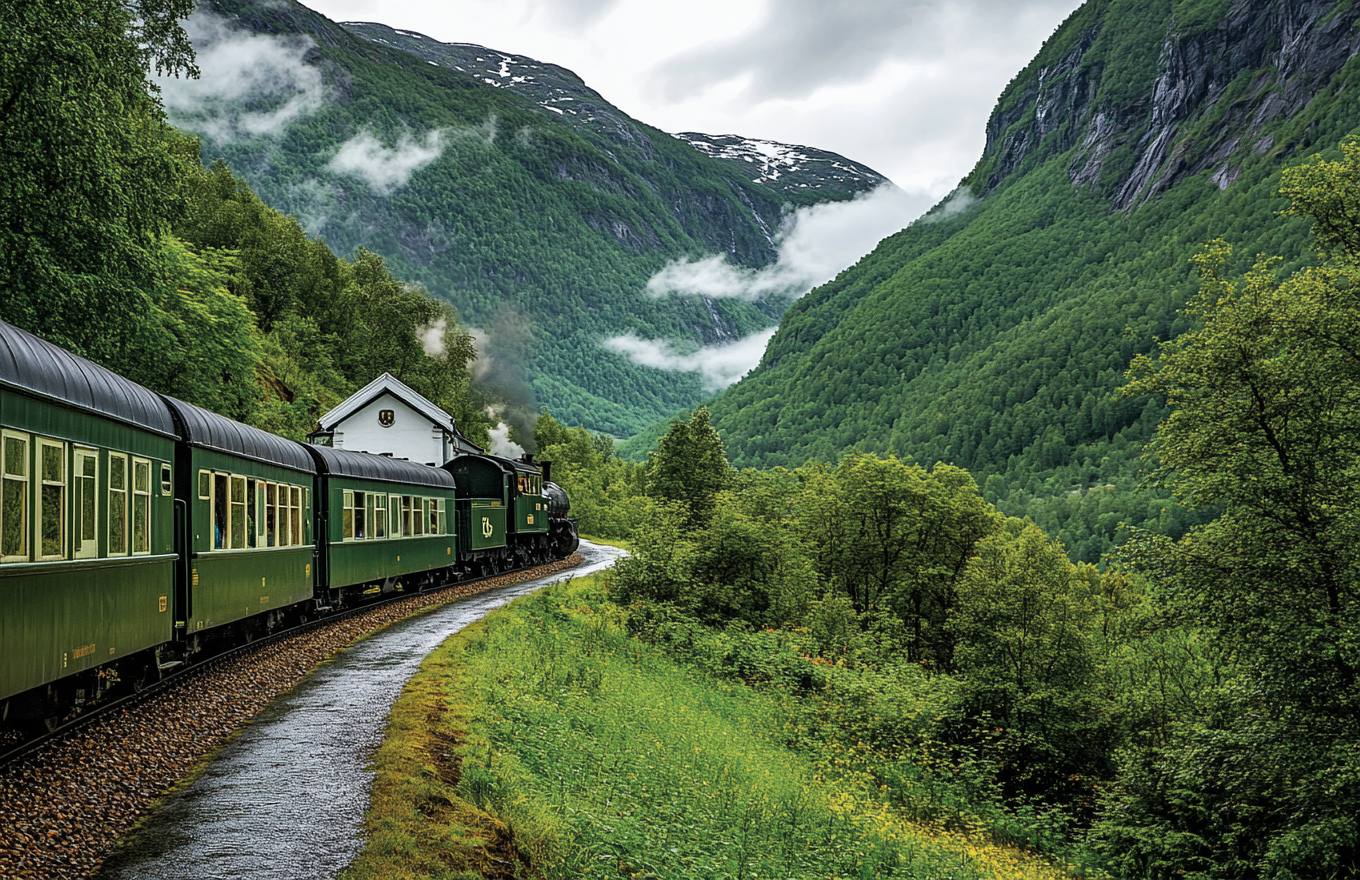
Norway: The Flåm Railway
The Flåm Railway is a famous train trip in Norway. It goes from Aurlandsfjord to Myrdal, covering 20km in an hour. The trip is short but shows off Norway’s wild beauty.
You’ll see deep fjords, waterfalls, and quiet valleys. It’s a great way to see Norway’s beauty.
Route
Country
Distance
Duration
Highlights
Glacier Express
Switzerland
291km
7.5 hours
Swiss Alps, picturesque villages, deep gorges
French Riviera by Train
France
218km
2.5 hours
Mediterranean coast, famous resorts, lavender fields
Flåm Railway
Norway
20km
1 hour
Deep fjords, waterfalls, serene valleys
Unexpected Gems: Scenic Train Routes in Eastern Europe
Go off the beaten path with these hidden gems of Eastern European rail travel. See the beauty of old train routes and heritage railways. They show you untouched nature and lively local culture. Let’s look at some amazing scenic journeys in the Balkans you shouldn’t miss.
Serbia: Belgrade to Bar Railway
The Belgrade to Bar Railway takes you from Serbia’s capital to the Adriatic Sea in Montenegro. It shows off the Balkans’ wild beauty. You’ll see tall mountains, deep canyons, and clear rivers. This route is a wonder of engineering and a way to see untouched nature.
Romania: Mocănița Steam Train
Take a trip back in time on Romania’s Mocănița steam train. It goes through the magical forests of Maramureș. This train is one of the last steam trains in Eastern Europe. It offers a historic and beautiful ride, going through pretty villages and green landscapes.
Slovenia: Bohinj Railway
Slovenia’s Bohinj Railway goes through the Julian Alps, with green valleys and clear rivers. It’s a mix of rail adventures and beautiful views. This route is great for those who love nature and want to see Slovenia’s culture and history.
How to Make the Most of Your Scenic Train Routes
Make your scenic train trips in Europe great with good train travel planning and smart packing. Whether you’re on the Swiss Alps’ Glacier Express or Norway’s Flåm Railway, prep makes it smooth and fun.
Best Times of Year to Travel
Choosing when to go makes a big difference in your trip. Winter is best for snow scenes, like on Switzerland’s Glacier Express. Spring and fall are great for mild weather and fewer people, perfect for France’s French Riviera or Serbia’s Belgrade to Bar Railway. Pick the best seasons for your routes for great weather and views.
What to Pack for a Scenic Train Journey
Make a essential packing list for your train trip. Think about the trip’s length and the weather. Here are some must-haves:
Layered Clothing: It gets cold and hot on long trips, so wear layers.
Tech Gear: Bring cameras or smartphones for photos, and chargers too.
Comfort Items: Use neck pillows, eye masks, and blankets for sleep.
Essentials: Don’t forget a water bottle, hygiene items, and a first-aid kit.
These things make your trip comfy, whether you’re seeing Queensland’s rainforest or Mexico’s Copper Canyon.
Food and Drink Tips for Train Travel
Enjoying onboard dining is a big part of train trips. But, it’s good to bring travel snacks too. Norway’s Flåm Railway has local snacks. For the Pikes Peak Cog Railway in Colorado, think about a picnic. Pack snacks, fruits, and treats to stay energized.
Every route, from Sri Lanka’s hills to the U.S.’s national parks, has amazing views. With the right pack and snacks, your train trip will be unforgettable. Enjoy every sunrise, sunset, and meal along the way.
Conclusion
Europe’s scenic train routes are more than just ways to get from one place to another. They take you deep into the heart of cultures, histories, and natural wonders. You can see the Alps, the Mediterranean, or the charm of Eastern Europe in a magical way.
Every train route tells a story. When you plan your trip, think about how train travel lets you see things in a special way. It’s a chance to really feel the place you’re visiting.
Get ready to start your own adventure with rail travel. Let it lead you to new places and new stories. Every trip by train is a special part of your life’s journey.
FAQ
What are some must-see scenic train routes in Europe?
Check out Europe’s stunning landscapes on 33 must-see scenic train routes. You’ll love the Glacier Express in the Swiss Alps, the Flåm Railway in Norway, and the French Riviera by train.
Why is train travel the best way to see Europe?
Train travel in Europe gives you amazing views and takes you right to city centers. It’s comfy, has less luggage hassle, and you get there faster than other ways.
How should I book European train travel?
Book your European trains on different platforms. Use rail passes for more freedom, look for early discounts, and book early to get the best prices and seats.
What are the top scenic train routes in Western Europe?
Western Europe has great train routes like the Glacier Express in the Swiss Alps, the French Riviera by train, and Norway’s Flåm Railway. They offer stunning views and unique experiences.
Are there scenic train routes in Eastern Europe?
Yes, Eastern Europe has hidden gems like the Belgrade to Bar Railway in Serbia, the Mocănița Steam Train in Romania, and the Bohinj Railway in Slovenia. These routes show off beautiful landscapes and rich culture.
When is the best time of year to travel on scenic train routes?
The best time varies by region. Spring and summer are great for mild weather and colorful landscapes. Autumn shows off beautiful leaves. Winter is magical in snowy places like the Alps.
What should I pack for a scenic train journey?
Bring layered clothes for changing weather, tech for photos, snacks, and your travel papers. Don’t forget a travel pillow and a book for comfort.
Are there food and drink options available on trains?
Yes, many trains have dining with local food. You can also bring your own gourmet picnic to enjoy during your trip.
“To awaken quite alone in a strange town is one of the pleasantest sensations in the world.” – Freya Stark
As a seasoned solo traveler, I’ve seen the power of traveling alone. It’s a chance to find adventure, practice mindfulness, or discover yourself. In fact, 79% of travelers say their first solo trips change their lives.
There are many places to go solo, for all kinds of interests. For 45% of solo travelers, it’s about connecting with their roots. And 62% want to dive into a new culture or community. South America is a favorite for 30% of solo travelers, offering unique experiences.
Traveling alone lets you try new things and meet people. 58% of travelers grow personally and make new friends. Even when things go wrong, like health issues or canceled plans, they can teach you a lot about yourself.
Embracing the Freedom of Solo Travel
Traveling alone has shown me the true meaning of freedom. I can plan my trips exactly how I want. A huge 85% of solo travelers love this freedom to choose their own path.
Traveling alone lets me discover myself. A big 78% of solo travelers say they’ve grown a lot from their trips. I can follow my heart and face new challenges without anyone else’s opinion.
Being on my own has made me more confident and self-reliant. An amazing 92% of solo travelers feel more confident after their trips. I learn to solve problems and face my fears, proving I’m strong and capable.
But solo travel isn’t easy. It can cost more, and making decisions can be hard. Yet, the freedom to be spontaneous is worth it. With the right tips and hacks, I can handle the challenges.
In the end, the freedom and empowerment of solo travel are worth it. It has changed how I see myself and the world. I think everyone should try solo travel at least once.
Connecting with Your Roots on a Solo Journey
As a solo traveler, I’ve found that ancestral travel is incredibly powerful. My trip to China, where my ancestors came from, changed me. It let me dive deep into my culture and history. The cultural immersion was truly life-changing.
In Beijing and Shanghai, I felt a strong bond to my family’s history. The sights, sounds, and tastes of China brought out a part of me I never knew. Confucius said, “Wherever you go, go with all your heart.” I took this to heart, embracing every new experience on my journey of self-discovery.
Visiting the village where my grandparents grew up was a highlight. Standing in their childhood home, I felt a deep sense of belonging and pride. This moment of personal growth and connection to my roots is unforgettable.
Solo travel can profoundly change us. An ancestral journey lets us understand ourselves and our place in the world better. As solo travelers, we can explore our heritage at our own pace. This freedom lets us fully immerse in the travel experience and connect with our roots in a deep way.
Finding a Global Community as a Solo Traveler
When I started solo traveling, I worried about feeling alone. But, I quickly found that solo travel lets you meet people from everywhere. Staying in hostels, which are cheaper than hotels, helped me meet others from places like Germany and Australia.
Places like Bali are especially popular, with hotel prices starting at just $5 USD per night. This made it easy to connect with travelers from all walks of life.
Going on group tours was a great way to meet others. Many tour companies now welcome solo travelers, making it easier to find travel buddies. I made some of my closest friends while traveling, sharing adventures and cultural experiences.
Traveling solo pushes you to meet new people. I started talking to locals and other travelers in lines and at markets. Sites like MeetUp.com and Couchsurfing helped me find people to meet up with.
Volunteering while traveling was also rewarding. In India, I found many volunteer opportunities. It was a chance to help and meet others who shared my interests.
Online groups, like the Solo Female Traveler Network, have made it easier to connect. Sharing my travel stories online helped me meet new people. Being open and confident has led to lasting friendships and memories.
Overcoming Challenges and Growing as a Person
Solo travel is a journey that opens us up to new cultures and experiences. It also challenges us to grow as individuals. Facing obstacles alone can be tough, but it helps us develop valuable life skills.
During my solo travels, I faced many challenges. Being spiked multiple times in Bali, the Philippines, and Thailand taught me to be cautious. It showed me the importance of trusting my instincts. Another time, I got stranded in Africa on New Year’s Eve. A taxi driver’s kindness made me realize the goodness in people.
Overcoming these challenges requires resilience and problem-solving skills. Solo travelers must be resourceful and adaptable when facing language barriers or getting lost. These experiences teach us to be self-reliant and confident.
Solo travel also offers great opportunities for personal growth. By stepping out of our comfort zones, we discover hidden strengths. Each challenge we overcome boosts our self-confidence and sense of accomplishment.
In the end, solo travel challenges help us grow and transform. Through resilience, problem-solving, and self-reliance, we become stronger and more confident. We’re ready to face whatever life brings our way.
Unforgettable Solo Travel Experiences
As a solo traveler, I’ve had many unique experiences. One was in Kefalonia Island, the sixth largest Greek Island. I spent days exploring its beaches and villages. The freedom and adventure were unmatched.
My visit to Tel-Aviv was also unforgettable. It’s known for its vibrant culture and photo spots. As a photography lover, I enjoyed capturing the city’s essence. From Neve Tzedek’s colorful streets to Carmel Market, every spot was a new discovery.
The Red Sea in Eilat is a hit for young solo travelers. It offers snorkeling and diving in clear waters. Exploring the coral reefs is an adventure not to be missed. Solo travelers can easily make friends while enjoying Eilat’s wonders.
One great thing about solo travel is making your own itinerary. In Prague, I enjoyed the local beer and explored at my pace. This freedom to dive into the culture made my trip unforgettable.
As a solo female traveler, safety is key. But with research and planning, even less-known places can be safe and rewarding. Huaraz in Peru offers the Huayhuash trek, a challenging yet rewarding adventure for solo travelers.
These stories are just a few of the many unforgettable solo travel experiences out there. Solo travel opens us up to new possibilities and creates lasting memories.
Transformative Moments of Solo Travel
Going solo on a trip can change your life. It helps you grow and think deeply about yourself. Many people now travel alone to find themselves and learn new things.
One traveler said her first solo trip was amazing. She took a train from Seattle to L.A. and then drove up the coast. It made her face her fears and learn more about herself.
Another traveler went to India alone at 22. She was not ready but learned to accept chaos. Solo travel helps people face their fears and grow stronger.
Most solo travelers want to dive into local cultures. They meet new people and learn about different ways of life. This broadens their view and makes them more empathetic.
Traveling alone can also make you feel better mentally. Many people feel less anxious after solo trips. It’s because they can set their own pace and reflect on their journey.
Tips for Staying Safe and Confident as a Solo Traveler
Traveling alone can be freeing and life-changing. But, it’s important to stay safe and feel confident. By using smart tips, you can face any fear and enjoy exploring the world by yourself.
Start by researching your destination well. Learn about local customs, safety, and emergency numbers. Websites from the U.S., U.K., and Canada have useful travel alerts and info on documents you need. Also, getting travel insurance can give you peace of mind.
Arrive during the day for better safety. Always be aware of your surroundings, especially in new places. Use clothes and bags that protect your stuff, like money belts and anti-theft packs.
Having a first aid kit is a must. Pack hand sanitizer, masks, Band-Aids, and more. Also, use RFID-blocking items to protect your identity.
Manage your money wisely. Use cards instead of cash and get a card with no foreign fees. Keep a spare card and cash somewhere safe. Carry important documents and make copies for security.
Stay in touch with family and friends. Share your plans and check in often. Save emergency numbers and sign up for the Smart Traveler Enrollment Program (STEP) for U.S. Embassy help.
Choose safe places to stay and read reviews. Use a doorstop, whistle, and VPN for safety. Be careful with public Wi-Fi to protect your data.
Don’t be afraid to ask for help. Talk to locals, other travelers, or your hotel staff. Confidence is key. With these tips, you can face any fear and have a safe, exciting solo trip.
Inspiring Stories of Life-Changing Solo Travel Experiences
Many solo travelers have found life-changing experiences on their journeys. Kiersten Rich’s first backpacking trip in Northern Vietnam in 2011 ignited her love for exploring. Brooke Saward talks about growing more confident over seven years of solo travel, showing the lasting effects of facing the unknown.
Overcoming challenges is a big part of solo travel stories. Suzie Agelopoulos tells of a packed van ride in Alexandria, Egypt, showing her ability to adapt. Alice Teacake’s adventures, like driving from the UK to Mongolia, show the courage solo travel builds.
These tales also show personal growth through solo travel. Stephanie Parker found kindness and hospitality in Sudan, changing her views. Christine Kaaloa learned about self-discovery on her first solo trip to India and Nepal. Stephanie Huff grew in confidence while traveling through Africa, facing new challenges.
Stories like Linda Dunsmore’s encounter with a friendly rickshaw driver in Beijing are common. They show the deep impact solo travel can have. These stories encourage others to explore, face the unknown, and find their own paths of self-discovery and growth.